
Pooling Water and Soggy Spots in the Yard? How Grading and Hardscape Fix It
September 28, 2026
QUICK ANSWER: Standing water and soggy patches almost always come down to where the ground is lower than it should be, where soil has compacted until it can no longer absorb rain, or both. Regrading the affected area so it sheds water at roughly a 2 percent slope solves most simple cases. When a low spot sits against a fence line, a mature tree, or a neighboring property that can't be reshaped, hardscape elements, a dry creek bed, a French drain routed under a walkway, or a catch basin tied into a patio's edge, carry the water somewhere useful instead of asking the grade to do a job it physically can't. Fixing the wrong problem, patching the surface without addressing where the water is actually coming from, is why the same wet spot keeps coming back season after season.
You've mowed around the same soft patch by the fence for two summers now, easing the mower wide so the wheels don't sink and leave ruts. After a hard rain it stays wet for days, long after the rest of the lawn has firmed back up, and by August it's more moss and bare dirt than grass. You've tried topsoil, you've tried reseeding, and the spot always comes back. What you're looking at isn't a lawn problem.
It's a water problem. The lawn is just where it happens to show up.
Why the Water Is Landing There and Not Somewhere Else
Water doesn't pool randomly. It collects at the lowest point of whatever path it's given. But that path isn't fixed, it was set the day the house was built, then reshaped gradually by years of settling, yard changes, and construction nobody thought to connect to drainage.
A Negative Or Flat Grade Near The Low Point
When ground slopes toward a low spot or remains nearly level, water collects instead of draining away. A minimum 2% slope, about ¼ inch per foot, helps direct water away from structures.
Compacted Soil That Has Stopped Absorbing
Foot traffic, parked equipment, and repeated mowing can compact soil, reducing pore space for infiltration. Clay-heavy soil throughout the Capital Region compounds the problem, causing low spots to remain saturated much longer.
A Downspout Or Sump Discharge Aimed At The Problem
A downspout or sump discharge placed too close to the foundation can concentrate water in one area. Extending the discharge farther away helps prevent repeated runoff from creating persistent wet spots.
Runoff From A Neighboring Or Higher Property
Water flowing from a neighboring or elevated property can enter your yard and collect in low areas. Filling the puddle alone will not solve the issue unless the incoming runoff is redirected.
A Tree, Stump, Or Removed Yard Feature That Changed The Flow
Removing a large tree eliminates roots that absorbed substantial soil moisture. Grading around an old stump or root flare can also create unintended depressions, changing drainage patterns and leaving water behind.
Reading Your Yard's Grade Before You Guess at a Fix
A rough sense of "it looks low over there" isn't enough to plan a fix that actually works. Reading the grade tells you if you're dealing with a small correction or a spot that was never going to drain on its own.
Check The Slope With Stakes And A String Level
Drive stakes at the wet spot and 10 feet away, then run a level string between them. Measuring the lower point’s drop shows whether the area has enough slope for proper drainage.
Watch It During And Right After Rain, Not Just After
Observe the area during rainfall and afterward. Water remaining 24 to 48 hours after rain usually indicates a drainage or absorption problem rather than a minor depression that naturally drains slowly.
Look At What’s Uphill Of The Wet Area
Trace the slope uphill from the wet spot toward the house, neighboring property, or pavement. Identifying where incoming water originates helps determine whether regrading is sufficient or a dedicated drainage path is necessary.
TIP: Take photos of standing water the same day after two or three different rain events across a season. A spot that only holds water after the heaviest storms needs a different fix than one that stays soggy after every light rain, and side-by-side photos make that distinction obvious months later when you're deciding on a solution.
When Regrading Solves It, and When It Can't
Regrading works by giving water a continuous downhill path away from the low spot, but a fix has to work with what's physically around that spot, not just what the math says the slope should be.
Simple Regrading Fits An Open, Unobstructed Low Spot
If a wet area sits in open lawn with space to create a gentle slope toward a safe drainage point, adding fill and restoring proper grade can often eliminate the problem without additional drainage systems.
A Tight Low Spot Between Fixed Features Often Can't Be Regraded
A soggy strip between a fence, driveway, and foundation may lack enough room for proper grading. Raising the ground could push water toward structures, making drainage worse. A dedicated outlet may be necessary.
Heavy Clay Subsoil Limits How Much Grading Alone Can Do
Even a properly graded yard over heavy Capital Region clay can temporarily puddle during intense rain. Grading moves water toward an outlet, but it cannot make dense clay absorb water faster.
A Flat Backyard With No Legal Outlet Needs An Engineered Path
Some properties lack enough elevation change to direct water toward a useful outlet. In these situations, underground drain lines, piping, or dry wells may provide a better solution than surface grading alone.
Hardscape Solutions That Do What Grading Can't
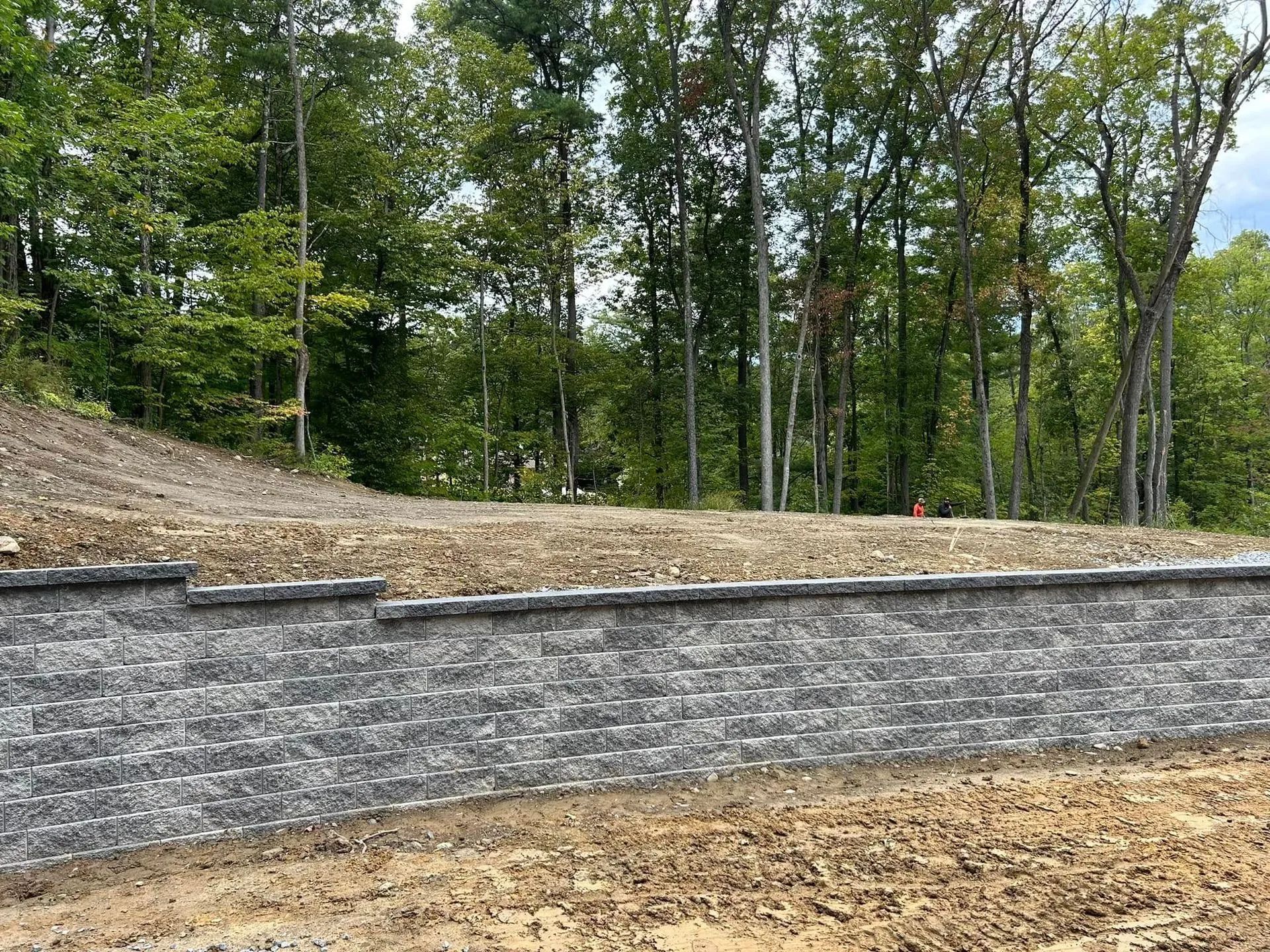
When the site itself won't allow a clean regrade, hardscape elements give water a defined channel or a place to disperse instead of relying on the ground's natural slope.
A Dry Creek Bed Routes Water Along The Surface
A shallow, gravel-lined channel follows the yard’s low point, carrying surface water toward a safe discharge area. Moisture-tolerant plants along the edges can make the drainage feature look intentional while handling typical residential runoff.
A French Drain Moves Water Underground
A perforated pipe surrounded by gravel and wrapped in filter fabric collects subsurface water beneath the problem area. It works especially well when saturated soil, springs, or high groundwater feeds the wet spot.
A Catch Basin Tied Into A Patio Or Walkway Edge Handles Concentrated Flow
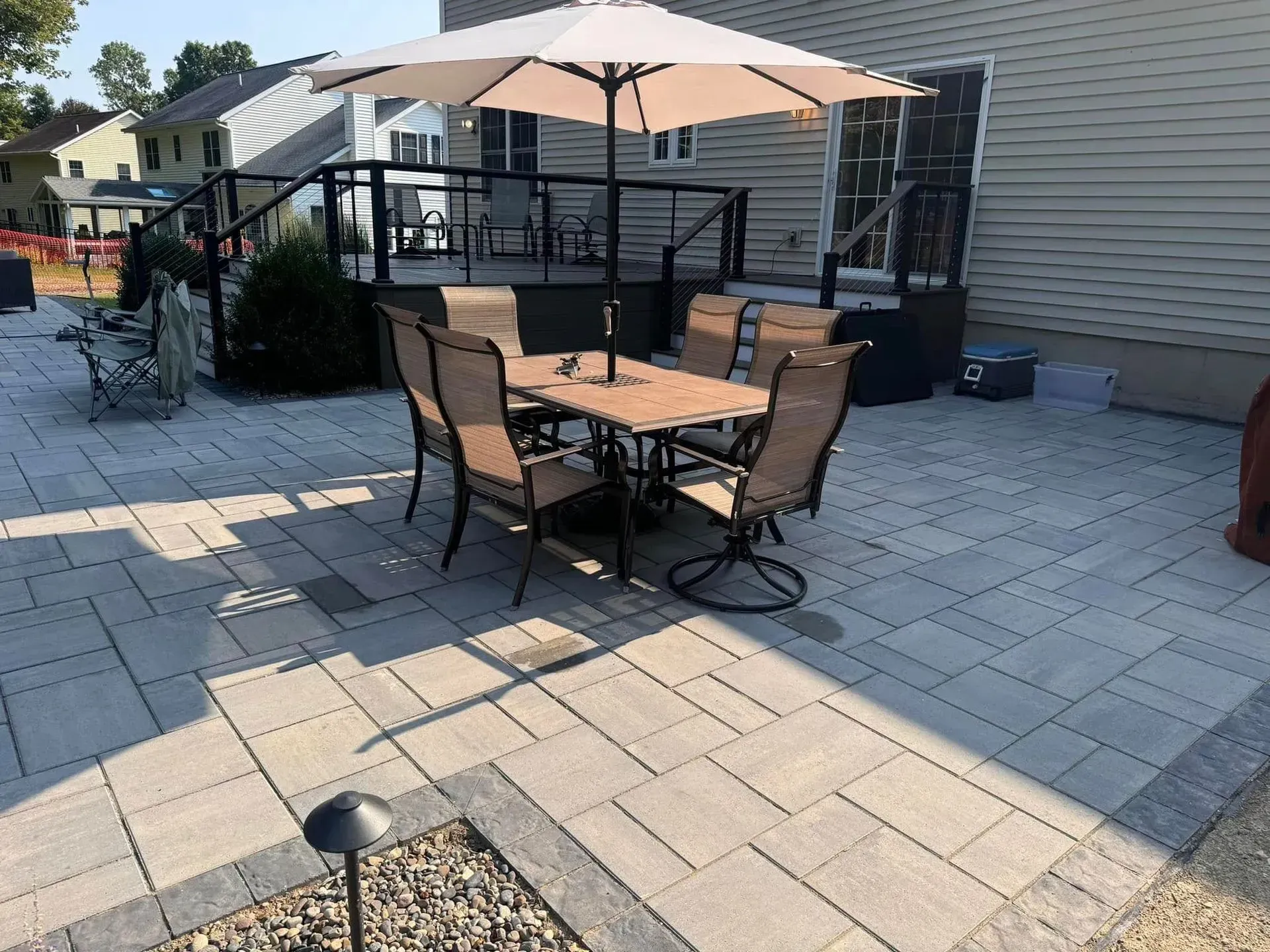
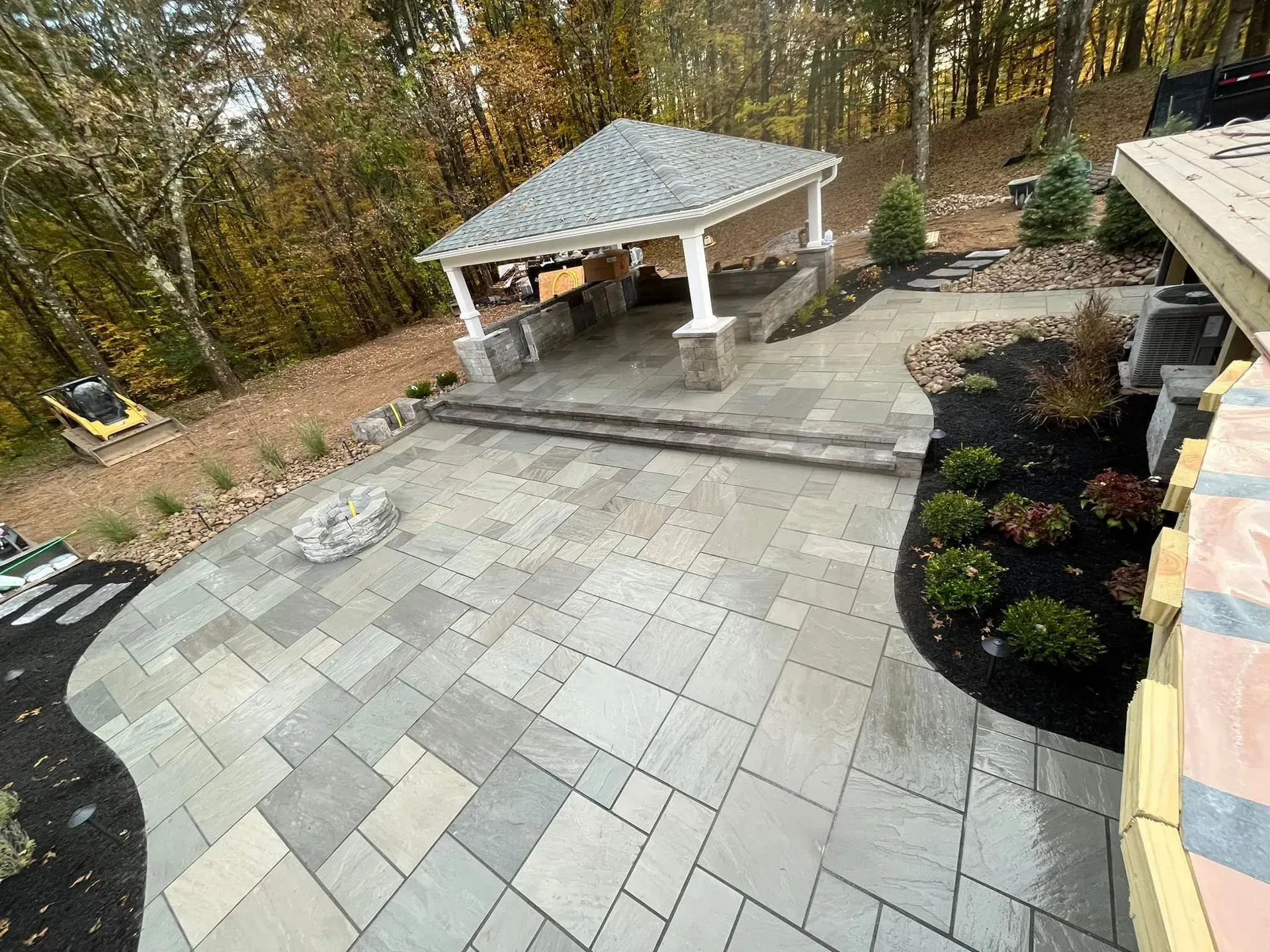
When a patio, walkway, or paver driveway sits beside a low spot, a catch basin can collect concentrated runoff at the edge and direct it away through underground piping before drainage problems develop.
Permeable Pavers Reduce The Runoff A Hardscape Surface Adds
Permeable pavers allow rainwater to pass through their joints into a gravel reservoir below. Unlike solid concrete, this system reduces surface runoff, helping prevent a new patio or walkway from worsening existing drainage problems.
WARNING: Never route a French drain, dry creek bed, or downspout extension so it discharges directly onto a neighboring property or into a public right-of-way without confirming where that water is legally allowed to go. Concentrating water that used to spread out gradually and sending it across a property line, even unintentionally, is a common source of neighbor disputes and can create a new problem somewhere else on the block.
Freeze-Thaw Conditions Change What a Fix Needs to Handle
A drainage solution built for this region has to account for more than a summer thunderstorm. Snowmelt and freeze-thaw cycles put a different kind of load on the same low spot.
Spring Thaw Releases A Lot Of Water At Once
A winter’s accumulated snowpack can melt within days, sending more water across the yard than typical rain. A drainage problem that seems minor during summer may leave the ground saturated for weeks each spring.
Frozen Ground Can't Absorb Anything
When thawing begins before the soil fully unfreezes, meltwater runs across the surface instead of infiltrating. Frozen subsoil acts as a barrier, often causing low spots to flood severely before grass can absorb water.
Buried Drain Lines Need To Sit Below The Frost Line
French drains and catch basin pipes installed too shallow can shift or crack as freezing soil expands and moves. Proper installation accounts for local frost depth, ensuring buried lines remain stable through seasonal ground movement.
Frequently Asked Questions
How do I know if my yard needs regrading or a drainage system?
Open ground with enough nearby elevation change usually calls for simple regrading. When the spot is boxed in by a fence, driveway, or foundation, or fed by underground water, a French drain suits it better.
Will adding topsoil to a wet spot fix it permanently?
Topsoil raises the surface only temporarily. If the grade still slopes water toward that spot, or compacted clay sits beneath, the new soil settles and the wet patch usually returns within a season or two.
Can a French drain be hidden under a lawn instead of a hardscape feature?
Yes. A French drain can run entirely beneath turf, with only a small grate or pop-up emitter showing at the discharge point. Routing it under a patio or dry creek bed adds a usable feature.
Why does my yard hold water even though it looks flat, not sunken?
A yard can look flat while sitting a few inches below the 2 percent slope needed to shed water. Over that subtle grade, water crawls slowly enough to look pooled, though more slope clears it.
Does clay soil make drainage problems worse even after regrading?
Clay-heavy soil, common across the Capital Region, absorbs water far more slowly than sandy ground, so a correctly graded yard can still puddle briefly during heavy storms. Adding a gravel drainage layer beneath addresses it.
How long does a drainage or regrading project typically take?
Simple regrading of a single low spot is often a one- to two-day job. Adding a French drain, catch basin, or dry creek bed extends that, depending on pipe length; most corrections finish within days.
Treating the Cause, Not Just the Wet Spot
The soggy patch by the fence, the puddle that lingers by the patio, the muddy strip where grass quits every August: each one traces back to water arriving somewhere it cannot leave quickly enough. More topsoil or a tougher seed blend treats the surface you can see while the grade or the buried drainage path that caused it stays exactly as it was. That is why the same spot returns, season after season, no matter how often you patch it.
High Country Hardscape & Landscape Designs LLC
reads the site before recommending anything, checking slope, soil, and where the water is genuinely coming from, so the solution matches the low spot rather than the guess. Drawing on 25
years of grading and drainage work across Clifton Park, NY, the team can tell a simple regrade from a spot that was never going to drain on its own. Understanding the cause first is what keeps the wet patch from quietly coming back.